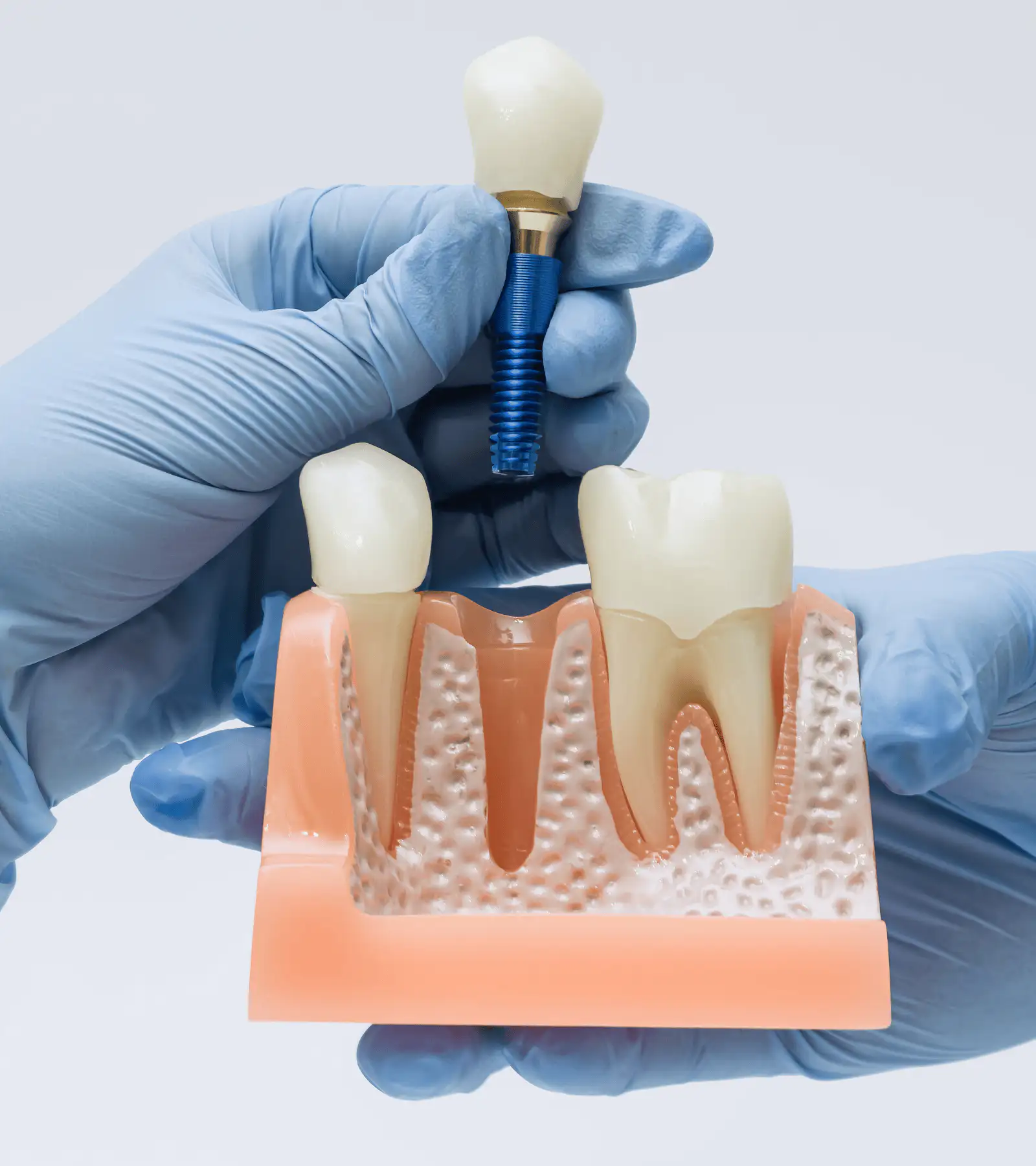
Dental implants are titanium posts placed into the jawbone to act as an artificial tooth root. Over time the implant fuses with the bone itself, giving a stable foundation for a crown, bridge, or denture that looks and functions like a natural tooth. Because implants don't rely on neighboring teeth for support, they also help preserve jawbone density that tends to break down after tooth loss.
Book a Consultation

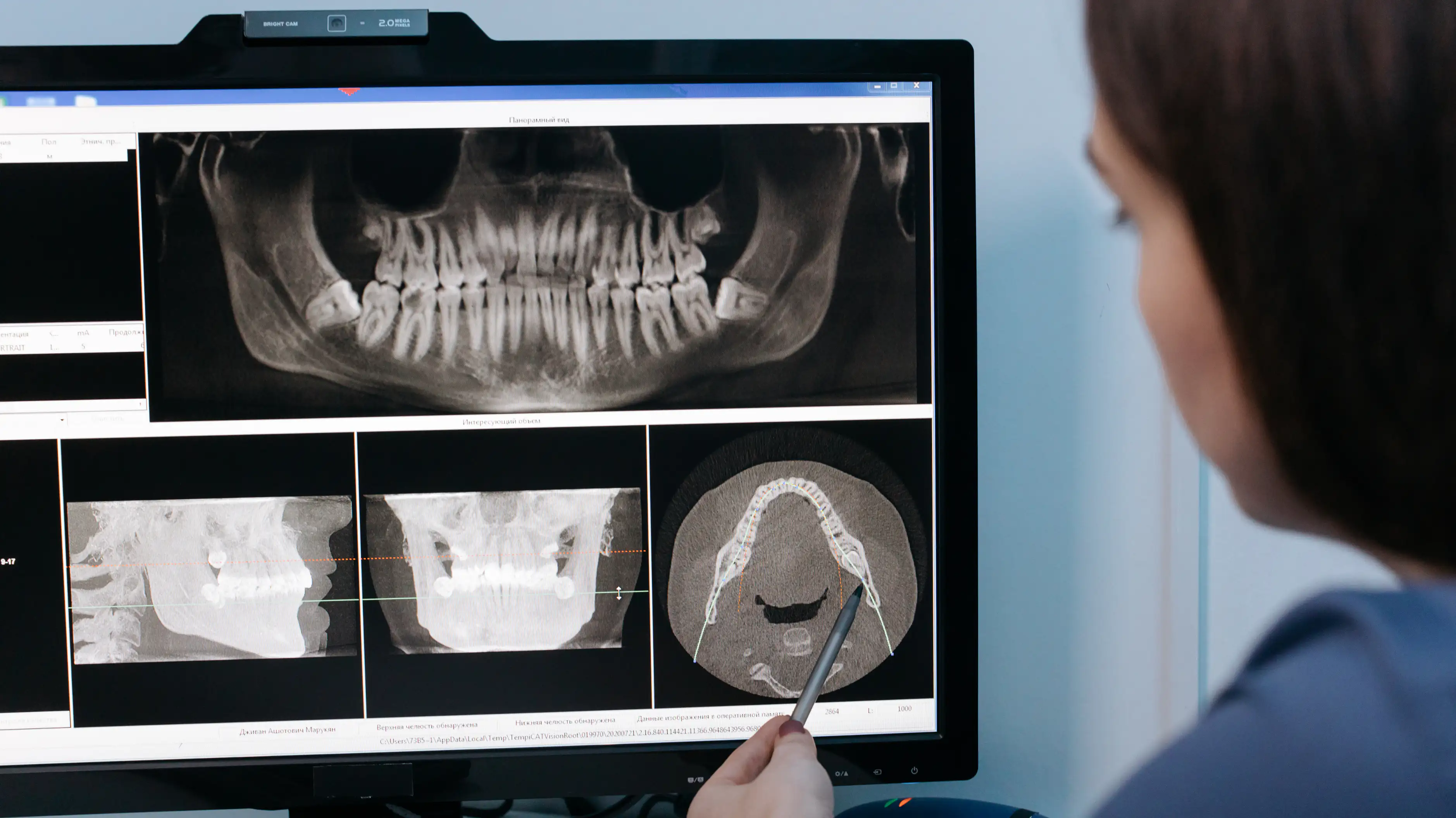
Every case starts with a full evaluation and imaging to confirm implants are the right fit, followed by a treatment plan built around your goals, timeline, and comfort.
You may be a good candidate if any of the following sound familiar. A consultation will confirm what's right for your specific case.
Here's what to expect, step by step.
Both replace missing teeth, but they work differently. An implant is anchored directly into the jawbone and doesn't rely on neighboring teeth, which also helps preserve bone density. A bridge anchors a replacement tooth to the teeth on either side of the gap and doesn't require surgery. Patients who want a permanent, bone-preserving option often choose an implant; patients who prefer a non-surgical route, or who aren't candidates for surgery, often choose a bridge.
Before recommending implant surgery, we start with a full evaluation of your teeth and goals, so the plan fits your case rather than a standard script.
Your plan accounts for your timeline, comfort, and priorities, and is walked through with you before any treatment begins.
We take the time to explain each step and answer questions as they come up, rather than rushing through the appointment.
Aftercare and follow-up are part of the plan from the start, not an afterthought once treatment is finished.
Placement itself is often a single visit, but full treatment — including healing time for the implant to fuse with the bone — typically spans a few months before the final crown is attached.
In most cases, yes. If bone density has declined in that time, bone grafting can rebuild the foundation an implant needs — it's a routine part of planning, not a separate obstacle.
Implants are cared for like natural teeth — brushing, flossing, and regular checkups. They don't decay, but the surrounding gum and bone still need routine attention.
The procedure is done under local anesthesia, and most patients describe recovery discomfort as comparable to a tooth extraction rather than something severe.
Both replace missing teeth effectively. An implant doesn't rely on neighboring teeth for support and helps preserve jawbone; a bridge is a non-surgical option that may suit patients who prefer to avoid surgery. Which is right depends on your specific case.
Coverage varies widely by plan and is still evolving industry-wide. Our team can help you understand what applies to your specific policy once we know your treatment plan.
Book an appointment online, or call our Delray Beach office directly to speak with our team about implant surgery.